Eco-Warriors: Teaching Sustainability and Climate Change in Faisalabad Classrooms
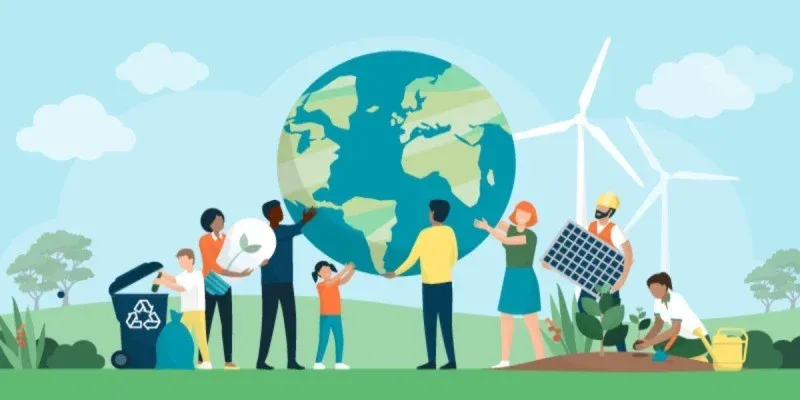
Faisalabad, globally recognized as the textile powerhouse of Pakistan, is facing an invisible and escalating crisis. Decades of rapid industrial expansion, coupled with dense urban growth, have taken a massive toll on the city's environment. Today, thick industrial smog blankets our streets every winter, and shifting global weather patterns bring unpredictable heatwaves and seasonal floods that threaten daily life.
While adults struggle to find immediate policy fixes, the real, permanent solution lies inside our schools. The classroom is the ultimate birthplace of change, and it is where we must train the next generation of environmental protectors.
Teaching sustainability and climate change in Faisalabad classrooms is no longer an optional extracurricular activity; it is a vital strategy for regional survival. Traditional schooling models that treat science as a series of definitions to memorize fail to show children the direct impact human actions have on nature.
By introducing environmental education early, schools can shape young minds to understand ecological conservation, carbon footprints, and resource scarcity. This ensures that the future leaders of Faisalabad’s industries will prioritize sustainable growth over pure exploitation.
The Local Reality of Global Climate Shifts
When we talk about climate change in Pakistan, we are not discussing a distant problem that will affect future generations centuries from now. We are talking about the daily reality of breathing polluted air, dealing with clean water scarcity, and experiencing extreme summer temperatures right here in our neighborhoods.
Faisalabad’s unique industrial profile means our students live at the very epicenter of these environmental challenges. Unfortunately, a vast majority of school-going children have no idea where smog comes from or how local plastic waste destroys urban drainage systems.
This gap exists because environmental science has long been treated as a dry, abstract chapter hidden at the back of a textbook. When students do not see the connection between their daily routines and the quality of their city's air, they have no reason to modify their behavior.
Schools have an urgent responsibility to ground these complex global issues in local realities, turning abstract science into personal civic duties.
Building a Future-Ready Academic Core
To successfully address these complex modern challenges, an educational institution must build its entire operation around a progressive framework. Transitioning from basic academics to impactful, real-world civic awareness requires deep structural dedication.
An example of a local institution actively leading this paradigm shift is the Ignite School System, which works tirelessly to integrate global competencies into primary education. You can explore their modern campus network and comprehensive academic systems by visiting the Ignite School System digital portal.
When a school treats environmental literacy as a core part of its mission, it signals to families that education must serve a greater purpose. This foundational commitment ensures that classrooms evolve beyond rigid lesson plans and actively train students to become proactive problem solvers for their communities.
Nurturing Empathy and Global Stewardship
Teaching children about sustainability goes far beyond simply explaining recycling or energy conservation. It is an intentional effort to cultivate deep empathy for the natural world and a profound sense of responsibility for global ecosystems.
This purpose-driven approach to character building is championed by visionaries who realize that academic excellence is completely empty without social responsibility. For an understanding of how forward-thinking educational guidance shapes these essential values in young minds, read the official leadership Message.
When school leaders champion these causes openly, environmental stewardship ceases to be an afterthought. It transforms into a vital part of the institution’s daily culture, inspiring teachers to design projects that connect classroom learning with the protection of our natural surroundings.
Aligning Institutional Identity with National Resilience
Creating a generation of eco-warriors requires an unchanging, long-term commitment that is woven directly into the structural identity of a school. It means the institution must actively see itself as a launchpad for future citizens who will directly rebuild and protect Pakistan’s economic and environmental landscape.
To learn more about the dedicated educators, institutional milestones, and core philosophies driving this environmental push, you can visit the About Us segment.
When a school’s internal community is fully aligned around sustainable development, it alters the entire academic environment. Protecting the planet stops being a temporary project and becomes a core principle that influences how students treat public property, manage waste, and respect resources every single day.
Transforming Classroom Rules into Green Habits
A school cannot successfully teach sustainability if its own daily operations contradict environmental values. The daily habits of turning off unnecessary lights, avoiding single-use plastics, and keeping the campus clean are deeply rooted in the structural culture of an institution.
This connection between behavioral regulation and personal responsibility is clearly defined in the school's long-term operational guidelines. To explore the deep strategic values and the foundational roadmap guiding this educational approach, read the official Vision statement.
A clear institutional vision ensures that environmental discipline is enforced through positive, everyday reinforcement. When a school sets strict boundaries against littering and resource waste, students naturally internalize these rules, turning temporary school protocols into lifelong personal habits.
Keeping Parents Connected to Eco-Friendly Initiatives
Transitioning to an environmentally conscious curriculum requires active cooperation from the entire household. Parents must be kept fully aware of the green projects, tree-planting drives, and recycling competitions happening inside the school gates so they can reinforce those exact same habits at home.
To bridge this communication gap and ensure families remain perfectly aligned with new sustainability milestones, schools utilize centralized announcement platforms. Parents can view upcoming environmental event schedules, drive details, and student assignments by checking the school's official Noticeboard.
This continuous loop of communication transforms a school-level project into a full-scale neighborhood movement. When parents see their children taking an active role in urban forestry or waste reduction, it inspires entire families to adopt more sustainable lifestyle choices.
Practical Ways to Teach Green Living in Faisalabad
Bringing environmental education into Faisalabad schools does not require overcomplicating the existing timetable. Instead, teachers can easily introduce hands-on, practical activities that make conservation a natural part of the student experience.
For younger children, this can look like managing small classroom composting boxes, setting up basic campus recycling stations, or maintaining mini-gardens that teach them how plants clean the air.
For older students, lessons can naturally pivot toward analyzing local industrial wastewater, studying energy efficiency, or tracking the carbon footprint of the fast fashion and textile industries. By integrating these real-world examples into science and geography, schools create a learning experience that is highly engaging, deeply memorable, and immediately relevant to the city they live in.
Unlocking a Sustainable Future for the Next Generation
Ultimately, the choice to prioritize environmental literacy in our classrooms is a choice between protecting our city and letting it succumb to industrial neglect. Faisalabad's future depends entirely on whether we can raise a generation of citizens who understand that economic development must never come at the cost of public health and natural beauty.
By empowering our children with the knowledge to fight climate change, we give them the ultimate tools to build a cleaner, healthier, and more resilient urban landscape. It is time for local educators, school administrators, and parents to join forces and embrace this vital educational revolution. Transforming our students into passionate eco-warriors is the definitive key to securing a green, vibrant, and sustainable tomorrow for Faisalabad.
Conclusion
Ultimately, the environmental survival of Faisalabad rests entirely on our willingness to reshape primary education for the modern era. By integrating sustainability directly into the classroom, progressive schools can successfully dismantle old patterns of environmental neglect and replace them with a deep, lifelong commitment to ecological preservation. When we equip our children with the scientific knowledge to understand climate shifts and the practical discipline to manage resources wisely, we build a powerful shield against regional climate disasters. It is time for our educational systems to fully step up to this challenge, transforming everyday classrooms into hubs of environmental innovation, and ensuring the next generation has the tools, mindset, and passion required to build a cleaner, safer, and truly sustainable Pakistan
Share on Social Media
Recommended For You









Readers Also Viewed These Articles
Categories
- blog
- Education
- News and Event
- General knowledge