Financial Literacy for Kids: Why Pakistani Schools Need to Teach Money Management Early
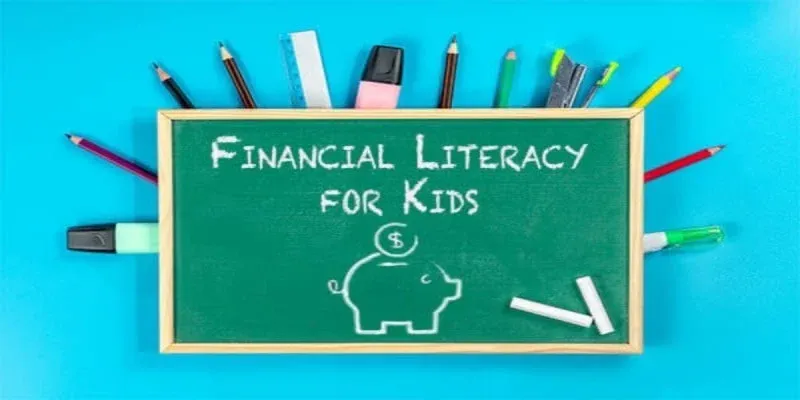
Imagine a young adult in Pakistan landing their first job, receiving their hard-earned salary, and immediately feeling completely overwhelmed. They know how to calculate complex algebraic equations but have absolutely no idea how to create a monthly budget, open a savings account, or understand inflation.
Unfortunately, this is the reality for millions of young Pakistanis today. Our traditional educational landscape has focused heavily on academic theory while leaving out the practical, real-world survival skills that dictate the quality of daily life.
Teaching kids about money management early is no longer just a useful life hack; it is an absolute economic necessity. Introducing financial concepts to children when their minds are most adaptable sets a foundation for lifelong financial security and economic independence.
The Core Crisis of Financial Illiteracy in Pakistan
The current state of financial understanding among young people in Pakistan reveals a stark gap between academic achievement and practical capability. Walk into almost any school across the country, and you will find students working tirelessly to score high marks in sciences and humanities.
Yet, if you ask those same students how inflation affects a simple savings pot, you will often be met with blank stares. This disparity exists because our cultural mindset has long treated money conversations as a taboo topic for children.
The Cost of Relying on Trial and Error
This silence has created a generation that relies entirely on trial and error to manage their personal finances. Relying on trial and error in the financial world means making incredibly costly mistakes.
These mistakes include accumulating bad debt, falling victim to financial scams, or failing to save for future emergencies. In the context of Pakistan, where economic volatility is a frequent challenge, the inability to manage money effectively exacerbates financial stress for families.
Redefining the True Purpose of Modern Education
To truly understand why money management belongs in the classroom, we have to look closely at what education is actually supposed to achieve. A holistic school environment should not just act as a factory that pumps out students who are good at taking exams.
Instead, its ultimate goal must be to prepare young minds to face the real world with confidence, resilience, and capability. An institution that champions this very philosophy is the Ignite School System, which works diligently to foster holistic student development.
You can discover more about their vision and educational approach by visiting the Ignite School System main portal.
Bridging the Gap Between Theory and Reality
When schools limit their scope to textbook formulas, they miss the chance to cultivate well-rounded citizens who can contribute meaningfully to the national economy. A modern curriculum needs to treat financial literacy with the exact same weight as reading, writing, and basic arithmetic.
By shifting the educational focus to include practical life skills, schools bridge the massive gap between academic theory and real-world survival. This ensures that students graduate with both a degree and the wisdom to navigate society.
Cultivating Character Through Behavioral Control
Teaching children how to manage money is not just about numbers, percentages, and math equations; it is deeply rooted in behavioral psychology. True financial literacy requires a high degree of patience, emotional control, and structured habits.
A child must learn to say no to immediate desires, like buying a trendy toy today, in order to achieve a bigger goal tomorrow. This internal regulation is closely linked to the overall structure that an educational institution provides to its students.
The Link Between School Structure and Financial Habits
A well-structured school environment relies on systemic rules to build strong character traits in children. The foundational habits required to track spending, resist impulsive purchases, and plan for the long term are directly nurtured by consistent school routines.
To explore how behavioral boundaries shape a student's personal development and long-term capability, you can read about the Importance of School Discipline.
When a student learns to respect boundaries and practice self-control in the classroom, they naturally apply those exact same principles to their personal finances, mastering the art of delayed gratification.
The Dynamic Shift to a Digital Economy
The world is moving faster than ever, and the financial landscape that today's children will inherit looks completely different from the one their parents navigated. We are living in an era of digital wallets, mobile banking apps, online freelance marketplaces, and decentralized currencies.
Young Pakistanis are no longer just competing with their peers in neighboring cities; they are stepping into a global, digital-first economy. If they do not understand how money moves globally, they will find themselves left behind.
Adapting Academic Leadership for Global Readiness
To meet these modern demands, forward-thinking academic leadership must actively redesign classroom strategies. Educational leaders need to look past old teaching methodologies and embrace innovative frameworks that prepare kids for tomorrow's challenges.
For a closer look at how visionary guidance shapes these academic shifts and prepares students for a complex global future, you can read the official Message from the institutional leadership.
Transitioning to a forward-looking curriculum means realizing that economic survival requires an early familiarity with financial tools and digital systems.
Overcoming the Taboo of Money Conversations
One of the biggest hurdles to implementing financial education in Pakistan is our deeply ingrained cultural attitude toward money. In many Pakistani households, discussing finances in front of children is considered inappropriate or impolite.
Parents often believe they are protecting their children by keeping them completely shielded from the financial realities of the household. While this comes from a place of love, it unintentionally leaves children completely naive about how money works.
Normalizing Healthy Financial Habits in Schools
Because these conversations rarely happen at home, the responsibility falls squarely on our schools to provide a neutral, safe, and structured environment where kids can learn about money without shame or anxiety.
When schools bring financial literacy into the open, they normalize healthy financial habits. Children learn that money is not an uncomfortable secret, but a practical tool that requires careful planning, responsibility, and ethical management.
Building a Progressive Future for Pakistani Youth
The long-term goal of introducing money management in schools is to build a society where financial stability is accessible to everyone, not just a privileged few. When an entire generation grows up knowing how to budget, the collective economy gets a massive lift.
This vision requires dedicated institutions that are genuinely committed to building a brighter, more practical future for Pakistani youth. You can learn more about the dedicated educators driving this progressive movement by visiting the About Us section.
Setting an Example for National Curriculum Shifts
When purpose-driven schools take the lead in implementing these changes, they set a powerful example for the entire country. They show that education can be deeply rooted in values while remaining highly practical and relevant.
Investing in early financial education is an investment in the ultimate self-reliance of our youth. This ensures they have the tools to build stable lives, manage resources wisely, and build a prosperous nation.
Practical Classroom Activities for Younger Students
Introducing financial literacy into Pakistani schools does not mean giving primary school children heavy textbooks on corporate finance or macroeconomics. Instead, it means introducing simple, engaging, and age-appropriate concepts into their regular school day.
For younger children, this can look like classroom activities where they use play money to buy basic school supplies. This helps them understand the foundational concept of trade-offs, cost, and basic transaction choices.
Advancing Financial Lessons for Older Students
As students move into middle and high school, the lessons can naturally evolve into tracking a hypothetical monthly budget. They can practice calculating the real cost of mobile data plans or understanding how taxation works in Pakistan.
By seamlessly weaving these practical exercises into existing subjects like mathematics, social studies, and civic education, schools can easily deliver essential financial training without overwhelming the students or overcomplicating the daily schedule.
Securing Long-Term Economic Resilience
Ultimately, the decision to teach financial literacy in our schools is a choice between raising a generation that constantly struggles with economic anxiety or raising one that steps confidently into the future.
Pakistan’s economic resilience relies heavily on the capabilities of its youth. If we continue to send young adults out into the world without teaching them how to manage their money, we will continue to see high rates of financial dependency.
Empowering the Next Generation of Pakistanis
By making money management a core part of early education, we give our children a powerful shield against economic uncertainty. We teach them how to be resourceful, how to plan for unexpected emergencies, and how to build a secure life.
It is time for educational policymakers, school owners, and parents across Pakistan to recognize this urgent need and take immediate action. Bringing financial literacy into our classrooms is the definitive key to unlocking a truly stable, self-reliant, and prosperous future for the next generation of Pakistanis.
Conclusion
Ultimately, integrating financial literacy into Pakistan’s primary education system is the definitive key to transforming the country's economic future. By dismantling cultural taboos around money and replacing them with structured classroom guidance, we empower the next generation to break free from the cycles of financial anxiety and dependency. When forward-thinking institutions embrace this responsibility, they do not just teach children how to count notes; they build resilient, self-reliant citizens who can confidently navigate a digital global economy. It is time for educational leaders, parents, and policymakers across Pakistan to take immediate action, ensuring our children graduate with both the academic knowledge and the practical money management skills required to build a stable, secure, and truly prosperous nation
Share on Social Media
Recommended For You











Readers Also Viewed These Articles
Categories
- blog
- Education
- News and Event
- General knowledge