AI Literacy for Kids: What Every Student Should Learn Before Entering the Digital Future
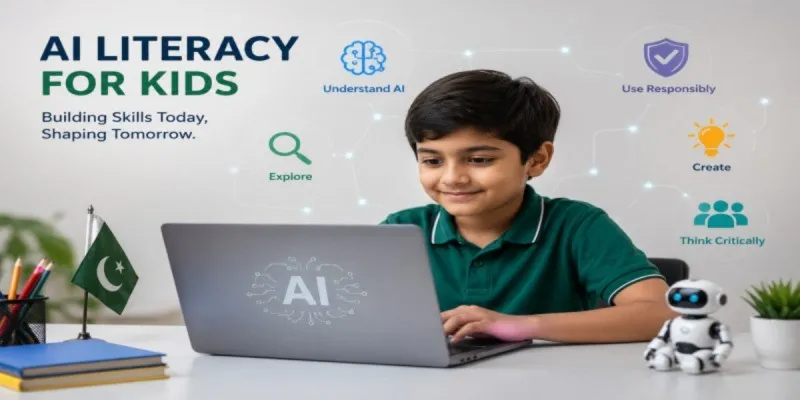
Artificial intelligence is no longer a futuristic concept confined to science fiction novels or high-tech research labs. It is actively reshaping the tools we use, the ways we communicate, and the foundational structure of the global workforce. From intelligent algorithms that customize online learning experiences to generative software capable of writing code and designing artwork, AI is becoming deeply embedded in daily life.
For young learners, navigating this technology requires far more than basic digital proficiency. True readiness demands comprehensive AI literacy: a deep, structured understanding of how these systems operate, where their limits lie, and how to harness them safely and ethically. Educational institutions dedicated to progressive 21st-century learning, such as the Ignite School System, are embracing this paradigm shift by integrating modern technological competencies into their core academic framework.
What Is AI Literacy and Why Does It Matter?
Digital literacy once meant knowing how to type, navigate the internet, and evaluate online sources. AI literacy builds upon these digital skills by teaching students to critically evaluate, interact with, and oversee artificial intelligence tools.
Teaching children about AI does not mean every primary or secondary student must become a computer programmer. Instead, it focuses on developing a clear conceptual understanding of how algorithms gather data, process patterns, and output decisions.
When young learners understand the mechanics behind machine learning, they shift from passive consumers of technology into active, critical directors of digital tools. This foundation prevents students from over-relying on automated tools for basic cognitive tasks while empowering them to use technology to enhance their original thinking.
Essential Core Pillars of AI Literacy for Students
Building a well-rounded AI literacy curriculum for young minds rests on four fundamental learning pillars that span technical understanding, critical analysis, and digital ethics.
Understanding How AI "Learns"
Students must grasp that artificial intelligence does not possess human consciousness, intuition, or independent thought. AI models learn by analyzing massive datasets to identify mathematical probabilities and patterns.
Teaching students that an AI tool simply predicts the most likely next word or pixel demystifies the technology. Recognizing that machine learning depends entirely on human-supplied data helps children realize that AI outputs are only as accurate or unbiased as the information used to train them.
Developing Critical Thinking and Verification Habits
One of the greatest risks of modern AI systems is their tendency to present incorrect information or fabricated facts, known as hallucinations, with absolute confidence. AI literacy equips students with a healthy sense of digital skepticism.
Learners must be trained to fact-check AI-generated text, cross-reference claims against trusted primary sources, and recognize algorithmic bias. By treating AI outputs as starting drafts rather than absolute truths, students refine their research capabilities and analytical reasoning.
Prompt Engineering and Effective Communication
Interacting with generative systems requires clear instruction and logical structure. Learning how to construct precise prompts teaches children how to articulate complex questions, specify necessary context, and break down large tasks into smaller, manageable steps. Prompt engineering acts as a practical exercise in communication and problem-solving, encouraging students to refine their vocabulary and think systematically about the information they are trying to discover.
Ethics, Privacy, and Responsible Usage
Teaching children the ethical boundaries of technology is crucial for long-term safety. AI literacy addresses critical issues such as data privacy, intellectual property, academic integrity, and cyber safety. Students learn why they should never input sensitive personal data into public algorithms and how to respect digital ownership. Parents and guardians looking for school updates on curriculum enhancements and campus academic guidelines can stay informed through the official Noticeboard.
Preserving Human Creativity in an Automated World
As automated software becomes capable of drafting essays, generating complex artwork, and solving mathematical equations, schools must double down on cultivating uniquely human traits. Emotional intelligence, empathy, original artistic expression, hands-on collaboration, and deep philosophical reasoning cannot be replicated by software algorithms. The goal of modern education is to ensure that technology serves as an accelerator for human creativity rather than a replacement for personal effort. When students learn to use AI as a brainstorming partner or research aid, they reserve their mental energy for high-level synthesis, original analysis, and creative problem-solving. School community initiatives, technology workshops, and student showcases often highlight these collaborative learning methods. Families interested in seeing how modern educational environments bring technology and creative learning together can explore recent campus activities on the News & Events page.
Preparing Young Learners for the Future Workforce
The job market that today's students will enter will look vastly different from that of previous generations. Almost every professional field ranging from healthcare, engineering, and law to graphic design, journalism, and education will involve working alongside intelligent automated systems.
Early exposure to AI concepts ensures that students build adaptiveness and technological resilience. Rather than fearing technological automation, AI-literate students view emerging tools as flexible resources they can master to solve complex real-world problems.
Educators and parents seeking further insights into modern teaching strategies, child development, and academic success can browse additional educational articles available on the school Blogs.
Conclusion
AI literacy is no longer an optional extracurricular activity for tech-savvy students; it is a foundational requirement for navigating the modern digital world. By teaching children how artificial intelligence works, encouraging critical verification habits, emphasizing digital ethics, and championing uniquely human creativity, we empower the next generation to step confidently into the future. Equipping young learners with these critical skills today ensures they grow into responsible, innovative, and thoughtful leaders in an AI-driven society
Share on Social Media
Recommended For You













Readers Also Viewed These Articles
Categories
- blog
- Education
- News and Event
- General knowledge